Dermatoscopy and Trichoscopy

dermatoscopy

The Power of Microscopic Visualisation

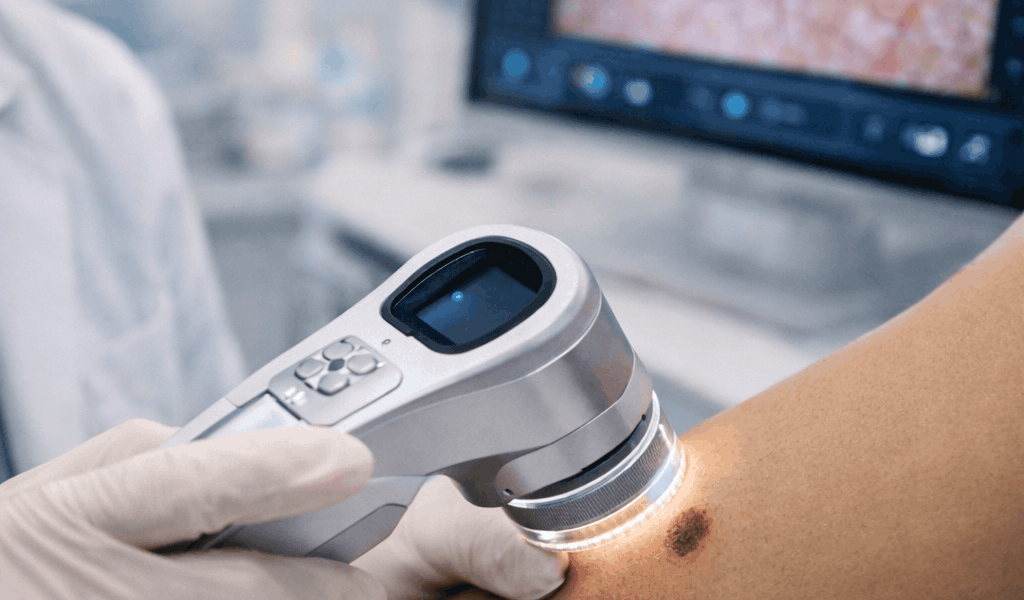
Modern dermatology has moved beyond the naked eye. Dermatoscopy (for skin) and Trichoscopy (for hair and scalp) are non-invasive diagnostic tools that use polarized light and high-magnification lenses (up to 20x or more) to visualize structures in the sub-epidermal layers. At Dermaspace, we use these tools as a standard of care to ensure that every prescription we write is backed by clear, visual evidence of the underlying pathology.

Precision Skin Analysis (Dermatoscopy)

Dermatoscopy is essential for the early detection of skin cancers, but its utility goes much further. It allows us to distinguish between benign moles and suspicious lesions, diagnose “masked” conditions like Discoid Lupus or Psoriasis, and monitor the progress of treatments for Melasma and Vitiligo. By seeing the pigment patterns at a microscopic level, we can predict how your skin will respond to certain lasers or chemical peels, greatly increasing treatment safety.

Advanced Hair & Scalp Diagnostics (Trichoscopy)

Hair loss is a complex issue influenced by genetics, stress, nutrition, and pollution. Trichoscopy allows us to look at the hair follicle’s “exit point,” the health of the scalp skin, and the thickness of individual hair shafts. We can differentiate between Androgenetic Alopecia (pattern hair loss), Telogen Effluvium (temporary shedding), and inflammatory conditions like Alopecia Areata, getting you straight to the medical solution that works.
svdt-img2

What to Expect During Your Session

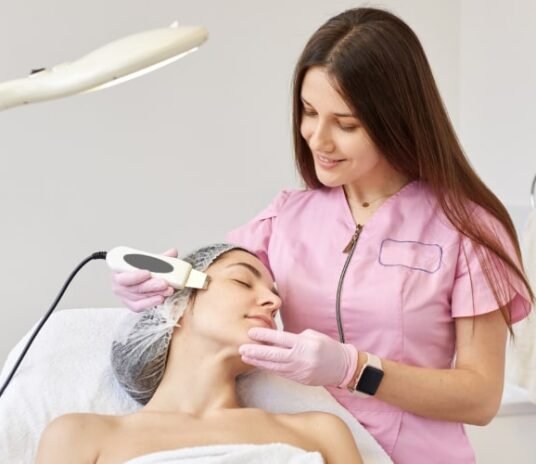
A Dermatoscopy or Trichoscopy session is entirely painless and takes just about 1 minute during your consultation. A specialized handheld device is placed gently against the skin or scalp and it is seen by the doctor as a magnified image. This will help the dermatologist to understand the exact process that is going on inside the skin and also to judge the prognosis, thereby increasing your commitment to the treatment process.

Frequently asked question

Your Questions answered with expert care

Why can't the doctor just look at my skin with the naked eye?
Many skin conditions look identical to the naked eye. Dermatoscopy allows us to see "clues" (like pigment patterns and blood vessel structures) hidden beneath the surface, ensuring an accurate diagnosis.
Is Trichoscopy necessary for every hair loss patient?
Yes. Because hair loss can be caused by anything from stress to genetics or scalp infections, Trichoscopy helps us identify the exact cause (e.g., miniaturization of follicles) so we don't waste time on the wrong treatment.
Does the procedure involve any needles or pain?
No. It is a completely non-invasive, painless "visual" test. The device just touches your skin or scalp gently.
Have Questions? Reach Out to us

Schedule Your Consultation today!

Loading...

Book Now

x

At vero eos et accusamus et iusto odio dignissimos ducimus qui blanditiis praesentium.

Contact with Us

70 Washington Square South,
New York, NY 10012, United States

Mon-Sat: 10:00 To 07:00 – 18.00pm

Saturday-Closed